 Flutter
Dart Isolates in Production: Killing Jank the Right Way
Every Flutter app runs on one UI isolate. How Dart isolates actually work, where they duplicate your memory, and the three APIs worth using.
A working journal of software engineering, AI tooling, and the craft of building things that last.
.NET, C#, Blazor, ASP.NET Core, EF Core — production engineering on the .NET stack.
Cross-platform mobile, Dart, widgets, performance, and shipping apps to iOS and Android.
LLMs, agents, MCP, RAG, fine-tuning, and the new shape of software work.
Cloud, Docker, CI/CD, edge, static sites, and the actual cost of running things.
Flutter
Every Flutter app runs on one UI isolate. How Dart isolates actually work, where they duplicate your memory, and the three APIs worth using.
Three years of Postgres performance tuning in production: index strategies that work, autovacuum traps, and the settings that actually move the needle.
How discriminated unions, JSON Schema validation, and a 4-retry loop cut hallucinated tool arguments from 18% to 0.3% in a real Claude + GPT-5 production stack.
Create a Flutter Audio Player in the Background.
What 8 months of .NET Aspire in production taught us: service discovery, telemetry, ACA pricing, and the Aspire features that quietly broke under load.
Six months running Flutter Web 4.0 in production with WASM after Skia died. Bundle sizes, SEO, real performance, and when to pick something else.
14 production .NET 9 AOT, Go, and Rust services: slim distroless images, BuildKit cache patterns, and security defaults that survive an audit.
Six months into production, RAG failure is silent. Here is what to measure, how to measure it, and the LLM-as-judge tradeoffs nobody tells you about in 2026.
EF Core 10 compiled models, batched query splitting, raw SQL with tracking — what works in production after months of real use, and what the docs skip.
A working engineer's deep dive into Flutter's custom RenderObject: how layout, paint, and hit-testing really work, with production code from a 50K-user app.
Two years running Caddy in front of 12 production services: what 2.8 got right, what the docs skip, and the gotchas I wish I'd known on day one.
I shipped a NativeAOT ASP.NET Core 9 service in February. After 4M requests, here's what changed: cold start, memory, image size, and trimming traps.
Dart FFI lets Flutter call C, Rust, and C++ directly. After shipping it in production, here is what works, what breaks, and the patterns I now use by default.
A working engineer's guide to building a custom AI skill for your codebase in 37 lines of code — the skill reviews a git diff and returns a structured critique covering bugs, security, style, and performance.
A working engineer's hands-on look at OpenCode — the open-source, AI-assisted coding tool that does most of what Claude Code does, ships with free models out of the box, and lets you wire up your own API providers without selling a kidney.
A working engineer's field guide to the new shape of AI-assisted development in mid-2026: the Model Context Protocol, the agent loop, model selection, and the engineering practices that turn agents into production teammates.
A working engineer's guide to the unified Blazor story in .NET 9 — what Blazor United actually changed, what stayed the same, where the framework wins in production, and where it still hurts.
A working engineer's field guide to Flutter in mid-2026 — the Impeller rendering engine, the widget model, what actually shipped, and the engineering practices that make Flutter apps feel right on iOS, Android, and the web.
A working engineer's guide to self-hosting a static site on a $4 VPS in 2026 — Caddy, Cloudflare, automated deploys, and the engineering practices that make a small site fast, reliable, and cheap to run.
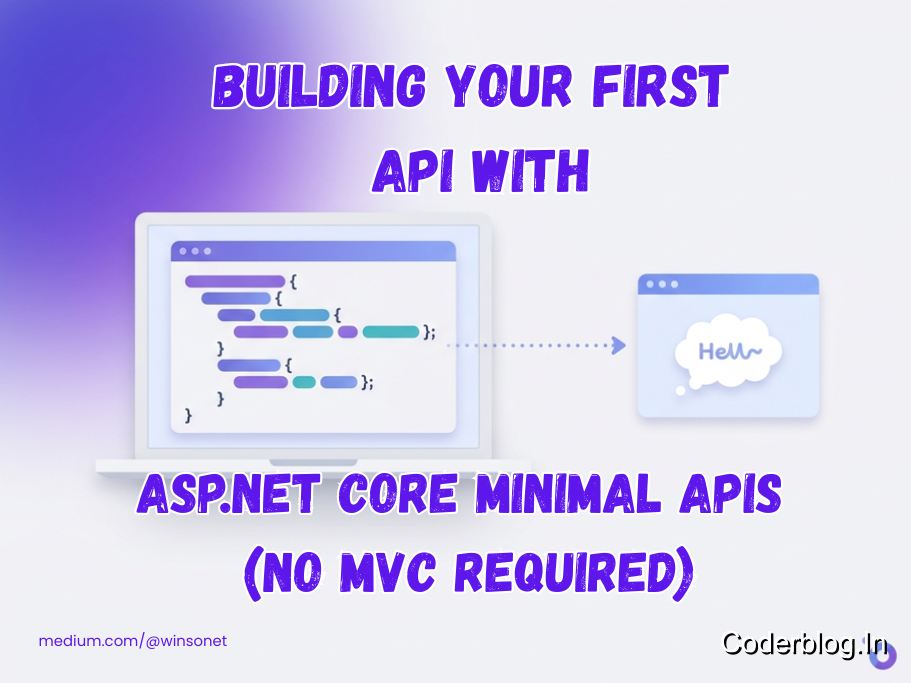
A working engineer's guide to Minimal APIs in .NET 9 — when the endpoint-as-a-function model beats controllers, when it does not, and the small set of conventions that make a Minimal API codebase feel like one.
A working engineer's guide to calling Rust from Flutter in 2026 — FFI, flutter_rust_bridge, the cases where the pairing wins, and the cases where you should reach for something simpler instead.